
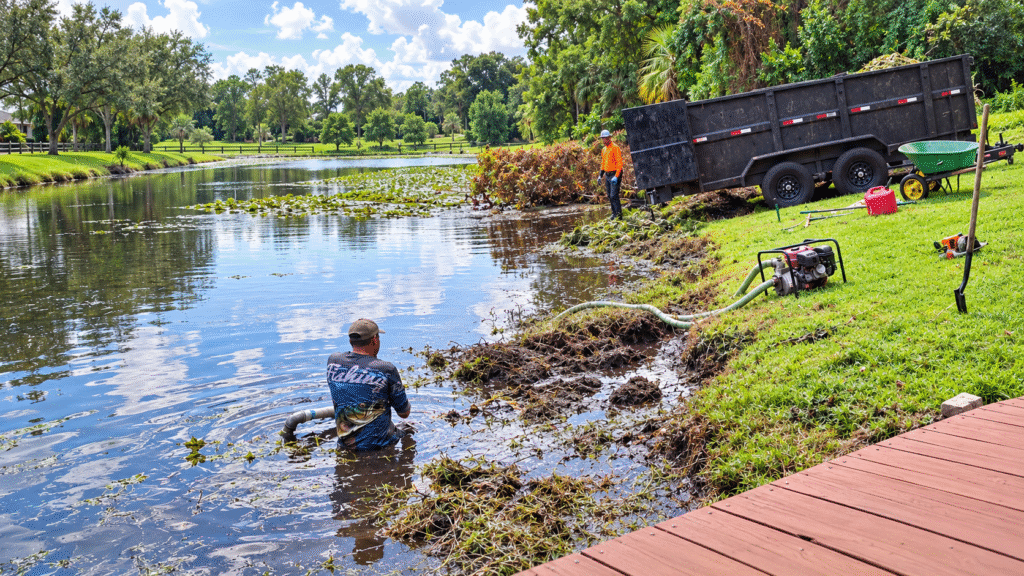
Your pond never shrinks overnight. It loses a few inches every year, and most owners notice only when the dock sits on mud.
Sediment builds up in silence. Rain, runoff, and dead plants leave a thin layer of muck on the bottom each year. After a decade or two, that layer can swallow several feet of water. Many owners ask, “How do I know if my pond needs dredging?”
The pond usually gives you clues long before it fails. We’ll cover five pond sediment buildup signs that Florida owners should never ignore. If you spot two or more, sediment is probably the cause.
But first, let’s see why this even happens.
Why Ponds Fill In With Muck
Every pond collects sediment over time. Rain carries soil, leaves, and grass clippings into the water. Storm drains and ditches deliver extra silt. Eroding banks add even more. Heavy Florida storms speed up this process.
Florida’s sandy soil makes the problem worse. Sand washes off bare ground easily, especially on sloped lawns and new construction sites. It settles fast near inlets and forms shallow bars that grow after every big storm.
Nutrients add another layer. Fertilizer and pet waste wash off yards and feed algae in the water. Algae and pond plants die each season, sink to the bottom, and rot into soft, dark muck. Trees near the bank drop leaves into the water, and those add to the pile every fall.
All of that material stacks up in layers. A pond that gains just an inch or two a year can lose several feet of depth over a couple of decades. The pond becomes shallower and warmer as the layer grows. Warm water holds less oxygen, and water quality drops along the way.
Ponds that catch runoff from roads, roofs, and neighboring lots fill in even faster. This chain reaction causes most of the shallow pond problems that owners complain about.
Once you know how the muck builds up, the warning signs become much easier to spot. Here are the five pond sediment buildup signs to watch for.
1. The Water Keeps Getting Shallower
Depth loss is the clearest warning, and you will see it in everyday ways. Some of the shallow pond problems include these. Your dock may sit over mud instead of water. Kayaks and small boats may scrape the bottom. Muddy flats may show up along the shore. Silt bars often form near pipes and inlets.
Compare the water level today with old photos of the pond. If you lost a foot or more, sediment is a likely cause. Depth protects a pond from heat and low oxygen. When the depth goes, other problems follow quickly.
2. Algae and Weeds Return Every Season
Muck works like fertilizer for your pond. It stores nutrients that feed algae and weeds year after year. Shallow water also lets sunlight reach the bottom, so plants spread faster.
You may treat the algae, and it returns a few weeks later. You may pull the weeds, and they grow back just as fast. That cycle tells you the real problem sits on the bottom. Chemicals and aerators can calm the symptoms. They can’t remove the muck that keeps feeding them.
3. A Rotten Egg Smell Hangs Over the Water
A healthy pond smells earthy at worst. A sulfur smell tells a different story. Thick muck breaks down without oxygen and releases smelly gas. You notice it most on hot days or when something stirs up the bottom.
Try a simple test. Push a stick into the mud near the shore. If it sinks several inches into black, sticky sludge, you have heavy organic buildup. Water that stays cloudy for weeks points to the same cause.
4. Fish Struggle and Wildlife Disappears
Shallow water heats up fast during Florida summers. Warm water holds less oxygen, so fish get stressed. A hot spell or a big storm can trigger a sudden fish kill.
Watch for fish gulping air at the surface early in the morning. Notice whether birds, frogs, and turtles visit less often. Fish need deep, cool zones where they can retreat. Sediment fills those zones first, causing the fish to come up. If this is happening, it’s time to get dredging services from professionals.
5. The Pond Floods or Drains Poorly After Storms
A pond stores water, and sediment steals that storage space. When capacity drops, water rises faster and stays high longer. Your yard, driveway, or a neighbor’s lot may flood as a result.
Check the outlet pipes and the spillway. Buried or clogged pipes signal heavy buildup. Stormwater ponds tied to a drainage system deserve extra attention. Slow drainage after a normal rain is a big red flag. Don’t ignore it.
When Quick Fixes Stop Working
Many owners try aeration, dyes, or weed control first. These tools have a place, and they can help. They treat the water above the muck, but the muck stays put.
Here’s a simple rule. If you keep paying for the same treatment and the problem keeps returning, you’re treating a symptom. Sediment removal fixes the cause. It restores depth, cools the water, and gives your fish room to breathe.
What to Do Next
Start with a basic depth check. Walk the edge, probe the mud, and note where the muck sits thickest. Take photos so you can track changes over time. A professional can then measure the sediment and tell you how much material must go.
Early action costs less. A crew can often clear a lightly filled pond with smaller equipment and less haul-off. If you wait too long, the bill grows. Banks slump, pipes clog, and repairs stack up.
If you want a lasting fix, our dredging services remove muck and bring back your original depth. Some sites also need bank reshaping or regrading. Our excavation team handles that work too.
Know the Rules Before You Dig
Lake dredging Florida often requires permits. State rules cover work in most surface waters, and that includes many man-made ponds. The state’s dredging and filling permit program explains how the process works.
Rules vary by location and project size. A good contractor checks them first, so you avoid delays and fines.
Keep Your Pond From Filling Back In
Dredging lasts longer when you stop the source of the sediment. A few simple habits make a big difference. Plant grass or native plants along the banks, and fix eroded spots as soon as you see them. Add rock near inlets and outlets to slow the flow. Cut down runoff from nearby slopes and drains, and check your pond depth every couple of years.
Don’t guess about your pond. A quick site visit shows how much depth you lost and which fix makes sense. Contact us today to book a visit and request a quote. We’ll walk your shoreline, check the muck, and give you clear next steps.